On Monday, after hearing about Lehman Brothers and Merrill Lynch, I jokingly said to a colleague, "not long now before we only have two banks left: the US Treasury and Goldman Sachs".
Three days later, one of the biggest serendipitous calls of my life may yet come true: bye bye Morgan Stanley.
Wednesday, 17 September 2008


Monday, 15 September 2008
Speed dating
Wow.
Like the ugly tag-along to make up numbers in a speed dating session, Leh Man gets a "not compatible" vote from not one, but two well-endowed suitors: the Yankee, Bo America, and that uptight Brit, B. Clay. (I use the term 'well-endowed' loosely... if you're desperate, you can't complain.)
Except Leh wasn't even dumped for the hot one... she got dumped for just the second-ugliest girl in the joint, Merrill. To his credit, B. Clay was smart enough to avoid the beer goggles and walk away after the dating agency declined to give a "100% satisfaction or your money back" guarantee.
How long before the market is reduced to just the US Treasury and Goldman Sachs?
Like the ugly tag-along to make up numbers in a speed dating session, Leh Man gets a "not compatible" vote from not one, but two well-endowed suitors: the Yankee, Bo America, and that uptight Brit, B. Clay. (I use the term 'well-endowed' loosely... if you're desperate, you can't complain.)
Except Leh wasn't even dumped for the hot one... she got dumped for just the second-ugliest girl in the joint, Merrill. To his credit, B. Clay was smart enough to avoid the beer goggles and walk away after the dating agency declined to give a "100% satisfaction or your money back" guarantee.
How long before the market is reduced to just the US Treasury and Goldman Sachs?
Saturday, 13 September 2008
Mark To Market Doughnuts
You know that financial writedowns are having real economy effects when you see this...
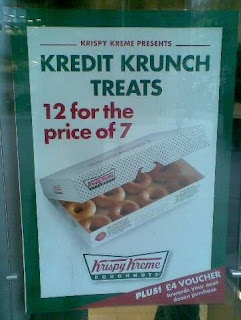 If you like that, I also have some BBB loans at the same rate...
In other news, self-fulfilling prophecy #2... Lehman Brothers. Hedge Funds 2, Investment Banks 2,598,451 (counting impact of IB-created structured securities).
 If you like that, I also have some BBB loans at the same rate...
In other news, self-fulfilling prophecy #2... Lehman Brothers. Hedge Funds 2, Investment Banks 2,598,451 (counting impact of IB-created structured securities).
Monday, 8 September 2008
FM and FM now BFF with US TSY
Just a short one tonight.
The big news, of course, is that Fannie Mae and Freddie Mac, the two mortgage giants that underpin the US mortgage market, will be placed into conservatorship by the US Government in further attempts to stabilise the housing market and the financial system.
Markets around the world rallied on the news, with financial stocks (unsurprisingly) taking a large slice of the gains. But here's my question (and this is something I'd be happy to have explained to me): given that Fannie Mae and Freddie Mac had been treated like quasi-government agencies to begin with, what actual advantage does placing it into conservatorship actually create? Had this not happened, the US Government would still have had to bail out the twin entities one way or another, to prop up the mortgage market and ensure that the MBSs issued by the banks have a buyer.
One can argue that, by turning the implied government guarantee explicit, declines in mark-to-market valuations of mortgage securities will slow or even reverse - thus providing impetus for market recovery. However, I see this as merely a short-term impact. The root cause, the cycle of housing downturns resulting in defaults and negative equity, has not really been resolved. Let's say this action results in some settling in the market, translating in easing of credit spreads above Treasury rates. This leads to some easing in the debt service costs of home mortgages. This is great news! Unless, of course, you are a subprime borrower - you are still shut out of the market. At its peak, subprime accounted for ~20% of home loans... taking out that much money from the system is not something you recover easily from just by lowering the cost of borrowing by a few part of 1%.
The real positive impact (and it has to benefit SOMEONE, since it's not immediately clear that taxpayers/homeowners will) may actually be that this process essentially turns corporate debt issued by Fannie and Freddie into government debt issued by the US Treasury... which is fantastic if you are a central bank or superannuation fund who invested in Fannie/Freddie bonds. I mean, US Treasury bonds, backed by a government with ballooning deficits and supported by a slowing economy, are the best proxy for risk-free assets, right?
Having said that, the greatest investor of our time disagrees with me, and he's had more time to think it over, so I may just be having a cynical moment.
UPDATE: Link to an article from the legendary Roger Lowenstein. Next up, let's play a game of "What Disaster Will Today's Morally Hazardous Actions Lead To?". At current pace, the next one should only be five years away.
The big news, of course, is that Fannie Mae and Freddie Mac, the two mortgage giants that underpin the US mortgage market, will be placed into conservatorship by the US Government in further attempts to stabilise the housing market and the financial system.
Markets around the world rallied on the news, with financial stocks (unsurprisingly) taking a large slice of the gains. But here's my question (and this is something I'd be happy to have explained to me): given that Fannie Mae and Freddie Mac had been treated like quasi-government agencies to begin with, what actual advantage does placing it into conservatorship actually create? Had this not happened, the US Government would still have had to bail out the twin entities one way or another, to prop up the mortgage market and ensure that the MBSs issued by the banks have a buyer.
One can argue that, by turning the implied government guarantee explicit, declines in mark-to-market valuations of mortgage securities will slow or even reverse - thus providing impetus for market recovery. However, I see this as merely a short-term impact. The root cause, the cycle of housing downturns resulting in defaults and negative equity, has not really been resolved. Let's say this action results in some settling in the market, translating in easing of credit spreads above Treasury rates. This leads to some easing in the debt service costs of home mortgages. This is great news! Unless, of course, you are a subprime borrower - you are still shut out of the market. At its peak, subprime accounted for ~20% of home loans... taking out that much money from the system is not something you recover easily from just by lowering the cost of borrowing by a few part of 1%.
The real positive impact (and it has to benefit SOMEONE, since it's not immediately clear that taxpayers/homeowners will) may actually be that this process essentially turns corporate debt issued by Fannie and Freddie into government debt issued by the US Treasury... which is fantastic if you are a central bank or superannuation fund who invested in Fannie/Freddie bonds. I mean, US Treasury bonds, backed by a government with ballooning deficits and supported by a slowing economy, are the best proxy for risk-free assets, right?
Having said that, the greatest investor of our time disagrees with me, and he's had more time to think it over, so I may just be having a cynical moment.
UPDATE: Link to an article from the legendary Roger Lowenstein. Next up, let's play a game of "What Disaster Will Today's Morally Hazardous Actions Lead To?". At current pace, the next one should only be five years away.
Monday, 18 August 2008
Rockett Trails
Thought I might do this before I go home, since I do need to sleep once in a while...
- Bankers snubbed. But then, if there are no bankers, who are they going to screw to finance their latest silly "creative outburst"? With trust funds at all-time lows due to the current market crisis and Mummy and Daddy going on long, expensive SKI (spending kids' inheritance) trips, I foresee a long-term decline in clubby clubs, and the eventual lifting of banker bans.
- Research to prove what I had always known. Now that we have proof that the optimal genetic portfolio must contain proportions of both Black and White, I contend that even better genetic portfolio returns are achievable by having an Asian exposure in the genetic portfolio. I contend further that, with the right SPV structures, one can create super-returns through Mixed-squared portfolios. Sample portfolio shown below*:
* Past portfolio performance does not guarantee similar future performance. Please consult your adviser before investing.



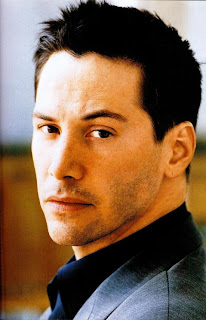

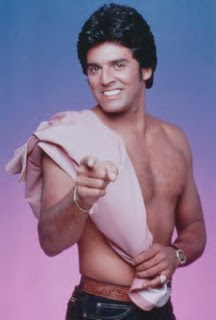
* Past portfolio performance does not guarantee similar future performance. Please consult your adviser before investing.


(We like balanced growth portfolios here in Rockett Fuel.)
Monday, 28 July 2008
Why I should be paid more
My employer suffered a 19% share price slump in the three weeks I was on leave.
Thursday, 24 July 2008
Fancy that
I've revamped my links using Google's/Blogger's new features. I think it's kind of cool - also makes it easier to fish for blogging ideas. Except I'd really prefer to have "Business only" Reuters newsfeeds. If you know of any other blogs, news sites, and websites worth looking at, let me know!
Subscribe to:
Posts (Atom)


 Posts
Posts

